This page, when complete, will have the Top 100 public domain Mystery stories. 24 books listed so far. Click on the links below to start reading.
 The Secret Adversary: This is Agatha Christie's first novel featuring Tommy (Beresford) and Tuppence (Prudence Cowley), The Young Adventurers, Ltd. Note: Only a couple of Christie novels are in the public domain.
 Mysterious affair at Styles: Agatha Christie's
first published novel introduces Hercule Poirot, Chief Inspector Japp
and Captain Hastings. The story is is set in a large, isolated country
manor. There are a half-dozen suspects, most of whom are hiding facts
about themselves.
Mysterious affair at Styles: Agatha Christie's
first published novel introduces Hercule Poirot, Chief Inspector Japp
and Captain Hastings. The story is is set in a large, isolated country
manor. There are a half-dozen suspects, most of whom are hiding facts
about themselves.

Whose Body? (1923) by Dorothy L. Sayers: Lord Peter Wimsey is intrigued by the sudden appearance of a naked body in the bath of an architect, and investigates. A noted financier has also gone missing under strange circumstances, and as the case progresses it becomes clear that the two events are linked in some way.
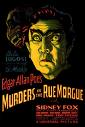
The Murders in the Rue Morgue, by Edgar Allan Poe: The story of the murder of Madame L'Espanaye and her daughter in the Rue Morgue in Paris. This novel laid the basis for the format of the genre: a detective who solves crimes that baffle the police, the aloof colleague who records the case, and the explanatory denouement at the end.
 The Innocence of Father Brown, by G K Chesterton: A series of stories starring the small priest called Father Brown. In the first story, The Blue Cross,
Aristide Valentin, the head of the Paris police, follows a track of
strange happenings, which leads him straight to the arch-criminal
Flambeau.
The Innocence of Father Brown, by G K Chesterton: A series of stories starring the small priest called Father Brown. In the first story, The Blue Cross,
Aristide Valentin, the head of the Paris police, follows a track of
strange happenings, which leads him straight to the arch-criminal
Flambeau.
More Father Brown stories
More works by G K Chesterton.
 The Hound of the Baskervilles, by Arthur Conan Doyle: The
novel traces the story of Sir Henry Baskerville, the heir to a large
estate after the death of Sir Charles Baskerville of a heart attack. Due
to a West Country legend about a huge demon dog seeking an ancient
vengeance against the Baskervilles, locals are convinced Sir Charles'
death was no accident.
The Hound of the Baskervilles, by Arthur Conan Doyle: The
novel traces the story of Sir Henry Baskerville, the heir to a large
estate after the death of Sir Charles Baskerville of a heart attack. Due
to a West Country legend about a huge demon dog seeking an ancient
vengeance against the Baskervilles, locals are convinced Sir Charles'
death was no accident.
More Arthur Conan Doyle here
Call Mr Fortune, Mr Fortune Speaking, Mr Fortune Explains: Three books of HC Bailey's short stories about Dr. Reg gie Fortune, indolent but implacable solver of mysteries and pursuer of evil-doers.(Link leads to a free Pdf download)
More Mr Fortune mysteries here.
The Thirty-Nine Steps, by John Buchan: Freelance spy Franklin P. Scudder reveals to  Richard Hannay that he has uncovered a German plot to murder the Greek Premier. A few days later, Hannay returns to his flat to find Scudder murdered.
 Average Jones by Samuel Hopkins Adams: Adrian
Van Reypen Egerton Jones, who prefers his nickname ''Average'', is a
member of the very exclusive Cosmic Club, whose members are all experts
in very diverse fields. Jones is an adviser to firms on advertising, and
uses his intelligence and good humour to solve unusual crimes and
cases.
Average Jones by Samuel Hopkins Adams: Adrian
Van Reypen Egerton Jones, who prefers his nickname ''Average'', is a
member of the very exclusive Cosmic Club, whose members are all experts
in very diverse fields. Jones is an adviser to firms on advertising, and
uses his intelligence and good humour to solve unusual crimes and
cases.
 A double-barrelled detective story: Mark Twain is at his irreverent best with this hilarious parody of the 19th-century mystery. The tale begins with the murder of Flint Buckner and a heinous crime against a young woman. Sherlock Holmes enters the scene to solve the mystery and avenge the lady. He matches wits with an improbable villain, Archy Stillman.
 An African Millionaire, by Grant Allen: My name is Seymour Wilbraham Wentworth. I am brother-in-law and
secretary to Sir Charles Vandrift, the South African millionaire and
famous financier. He is not a man whom any common sharper can take in, is Charles
Vandrift. I have only
known one rogue impose upon Sir Charles, and that one rogue, as the
Commissary of Police at Nice remarked, would doubtless have imposed
upon a syndicate of Vidocq, Robert Houdin, and Cagliostro.- Stories of Colonel Clay, a consummate rogue.
An African Millionaire, by Grant Allen: My name is Seymour Wilbraham Wentworth. I am brother-in-law and
secretary to Sir Charles Vandrift, the South African millionaire and
famous financier. He is not a man whom any common sharper can take in, is Charles
Vandrift. I have only
known one rogue impose upon Sir Charles, and that one rogue, as the
Commissary of Police at Nice remarked, would doubtless have imposed
upon a syndicate of Vidocq, Robert Houdin, and Cagliostro.- Stories of Colonel Clay, a consummate rogue.
 The Circular Staircase, by Mary Roberts Rinehart: A Gothic mystery unfolds when a spinster arrives at the mansion she's rented for the summer. Plans for a restful vacation are soon interrupted by niece and nephew, ghosts and spirits, murder and mayhem.
 Max Carrados, by Ernest Bramah: Max Carrados is blind, but in his case blindness is more than
counter-balanced by an enormously enhanced perception of the other
senses. He uses this heightened perception to superlative effect in the difficulties and
emergencies that confront the wealthy amateur when, through the
instigation of his friend Louis Carlyle, a private inquiry agent, he
devotes himself to the elucidation of mysteries.
Max Carrados, by Ernest Bramah: Max Carrados is blind, but in his case blindness is more than
counter-balanced by an enormously enhanced perception of the other
senses. He uses this heightened perception to superlative effect in the difficulties and
emergencies that confront the wealthy amateur when, through the
instigation of his friend Louis Carlyle, a private inquiry agent, he
devotes himself to the elucidation of mysteries.
More Ernest Bramah books here (Gutenberg link)
 Sherlock Holmes, there were
a whole slew of other detectives who popped up in the pages of the
British popular magazines of the time, all hoping to cash in. One of the
best was Martin Hewitt, a lawyer who discovered he had extraordinary
deductive abilities. And so he decided to become a private detective,
with offices close to the Strand, near Charing Cross station. More works by Arthur Morrison
Sherlock Holmes, there were
a whole slew of other detectives who popped up in the pages of the
British popular magazines of the time, all hoping to cash in. One of the
best was Martin Hewitt, a lawyer who discovered he had extraordinary
deductive abilities. And so he decided to become a private detective,
with offices close to the Strand, near Charing Cross station. More works by Arthur Morrison
 Malcolm Sage, Detective, by Herbert Jenkins: Summary from Kevin Burton Smith's "Thrilling Detective" website: Malcolm Sage had been a hot shot intelligence agent for Britain’s Division Z during the Great War, but when the fighting ceased, his thirst for action and adventure didn’t. Fortunately, his old chief from Division Z helped him set up the Malcolm Sage Detective Bureau, and much merry mayhem and more than a few ripping good yarns ensued.
  The Middle Temple Murder by J. S. Fletcher: While walking home late one evening, Frank Spargo, assistant editor of London's Watchman newspaper, sees a dead body that the police have just discovered in Middle Temple Lane, with no identification. At first it appears that this might simply be a case of a drunk who fell down some stairs, but slowly the clues unwind, leading Spargo through a route that touches some diamonds, rare stamps, and a mysterious leather box.
 The Mystery of the Boule Cabinet by Burton E. Stevenson: Mr. Vantine, a connoisseur of antique art objects, finds a stranger from France dead in his house. A few hours later, Mr. Vantine himself is found dead in the same place, in the same manner. Their deaths seem to have something to do with a Boule Cabinet that has been shipped to him by mistake from France.
 The Adventure of the Eleven Cuff-Buttons by James Francis Thierry: Being one of the exciting episodes in the career of the famous detective Hemlock Holmes, as recorded by his friend Dr. Watson. Where would mystery fiction be without its parodies?
  The Adventures of the Infallible Godahl by Frederick Irving: Six short stories featuring a roguish master thief: Writer Oliver Armiston's crime plots were so perfect that the underworld used them as blueprints for real-life jobs. He retires in disgust after master thief Godahl tricks him into providing the plan for an historic crime. Irving's stories were so intricately plotted that he abandoned Godahl after just six short stories simply because he had run out of ideas.
  The Abandoned Room, by Charles Wadsworth: On the eve of the day that he planned on removing his grandson from his will, Silas Blackburn goes to bed in the abandoned room where many of his family have died in agony. In the middle of the night he is found dead in this locked room.
  Agatha Webb, by Anna Katharine Green: As a convivial group leaves a dance one night, a young man rushes by muttering "Thank God, this night of horror is over"... But soon therafter cries of "Murder!" alert the group that Agatha Webb has been stabbed to death!
 The Albert Gate Mystery, Further Adventures of Reginald Brett, Barrister Detective, by Louis Tracy (Gordon Holmes): In an Albert Gate mansion a number of Turkish gentlemen had taken up their residence for the purpose of having some fifty-odd wonderful diamonds belonging to the sultan cut and polished. They had enlisted the protection of the English Government, and the police equipment and caution exercised in regard to the safety of the Turks and the jewels were such that the country was electrified when one morning four Turks were found dead in their rooms, the diamonds were missing, and the particular Assistant Secretary in the Foreign Office [...] is found to have mysteriously disappeared. -- from a New York Times review
 The Almost Perfect Murder A Case Book Of Madame Storey By Hulbert Footner. Containing the following stories: The Almost Perfect Murder; Murder In Masquerade; The Death Notice; Taken For A Ride; It Never Got Into The Papers: When charming Broadway star Fay Brunton becomes engaged to a man whose wife died under suspicious circumstances, Madame Storey decides to investigate the case.
  An Artist in Crime by Rodrigues Ottolengui: “If I knew that man Barnes was after me, I should simply surrender.” This promised to be the beginning of an entertaining conversation, and as he could not sleep, Mr. Barnes prepared to listen. Extensive experience as a detective had made him long ago forget the philosophic arguments for and against eavesdropping. The voice which had attracted him was low, but his ears were keen. He located it as coming from the section next ahead of his, number eight. A second voice replied: “I have no doubt that you would. But I wouldn’t. You overestimate the ability of the modern detective. I should actually enjoy being hounded by one of them. It would be so much pleasure, and I think so easy, to elude him.”
